

Beyond Aesthetic: The Strategic Thinking Behind the New Zenyus AI Website

How branding, UI/UX, digital psychology, and perception design shaped the rebuilding of Zenyus AI’s online identity.
Most people think website redesigns are visual projects. The meaningful ones aren’t.
A strong website redesign is fundamentally a business and perception exercise disguised as a design exercise. It forces uncomfortable but necessary questions: What perception is being created within the first few seconds? Does the digital presence reflect the maturity of the company’s thinking? Is expertise being communicated clearly, or hidden behind complexity? Does the experience reduce uncertainty or increase it? Is the design built for attention, or for trust?
That became the true starting point behind the new Zenyus AI website.
While the development effort focused on rebuilding the technical foundation—architecture, scalability, responsiveness, and performance—the strategic thinking behind the redesign centered on something else entirely: perception. Not simply how the website looks, but how the company feels digitally.
The Problem Was Never Just the Website
The previous website was functional. It explained services, contained the necessary pages, and technically did its job. But modern brands are no longer judged on functionality alone—they are judged on perception.
This is especially true in consulting. A nonprofit leader evaluating Salesforce or AI consulting partners is not simply comparing service capabilities; they are subconsciously assessing operational maturity, communication quality, strategic clarity, attention to detail, and trustworthiness long before a discovery call ever happens.
As Zenyus AI evolved internally—with sharper positioning, stronger nonprofit expertise, deeper AI capabilities, and a more refined consulting identity—the digital experience no longer reflected that same maturity. Over time, that kind of disconnect becomes dangerous, because eventually a company’s online presence begins to undersell its real capabilities.
That became the actual redesign challenge.
Designing the Experience Emotionally Before Designing It Visually
One principle shaped the entire UX strategy: users respond emotionally first and logically second.
Every interface creates subconscious signals. It communicates either clarity or confusion, confidence or hesitation, trust or skepticism. That meant decisions around layouts, colors, and content structure came later. The first priority was defining emotional outcomes.
The new website needed to feel clear, strategic, confident, human, and premium.
- Clarity meant users should immediately understand what Zenyus AI does without decoding consulting jargon.
- Strategic means the experience should feel intelligent and intentional rather than trend-driven.
- Confidence requires restraint, because confident brands do not over-explain themselves visually.
- Human meant that despite operating in enterprise consulting, the experience should not feel cold or robotic.
- Premium did not mean luxury for aesthetics’ sake—it meant thoughtfulness, structure, and polish.
These emotional principles became the foundation for every branding, UX, and marketing decision that followed.
Color Psychology Was Used Intentionally
The visual identity was never built around what simply looked modern or visually appealing. It was built around behavioral perception.
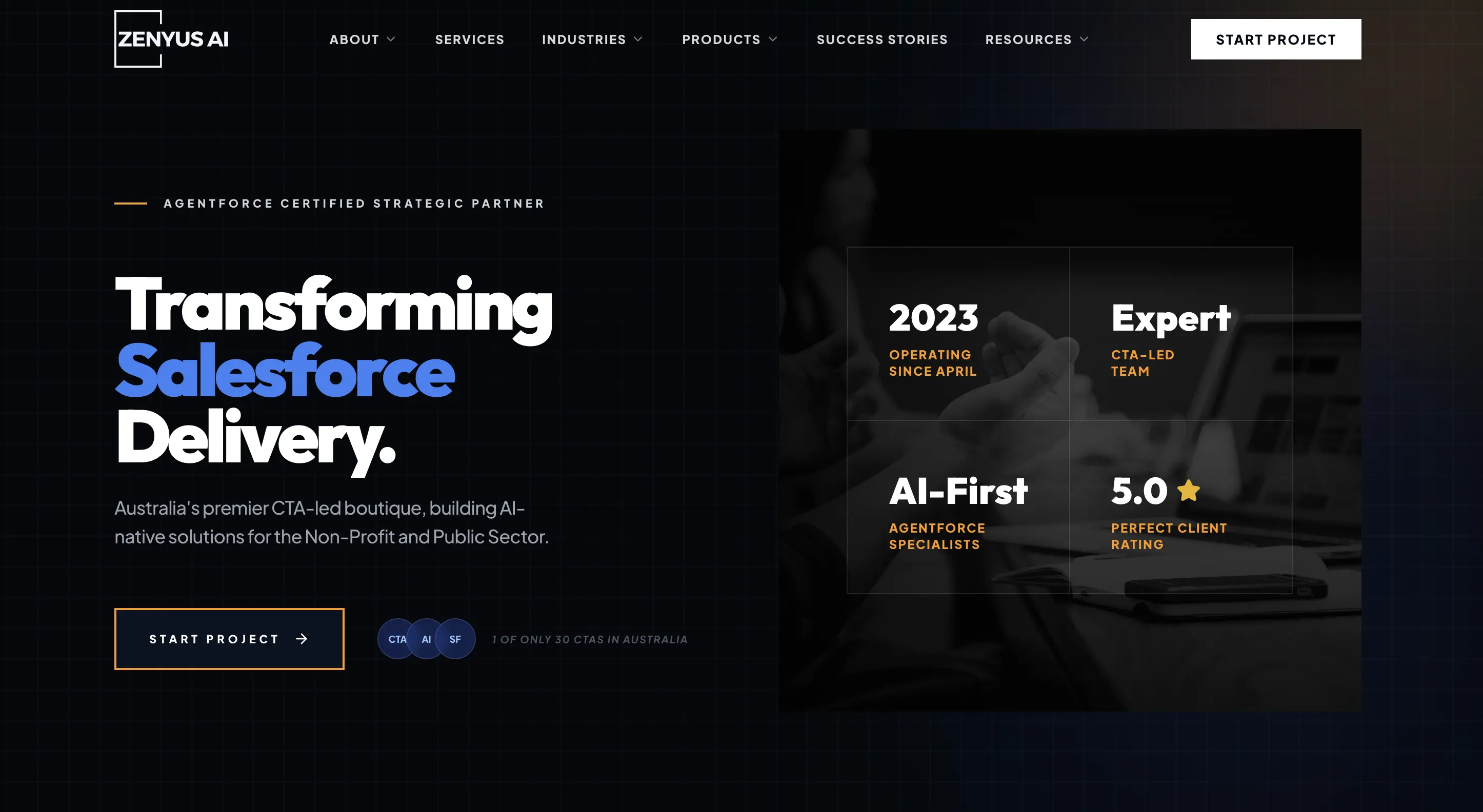
Rather than following the hyper-saturated SaaS aesthetic dominating many tech websites, the visual system was intentionally developed using contrast psychology. Deep navy backgrounds create seriousness and authority. Electric blue accents introduce energy and technological sophistication. White space creates breathing room and confidence, while orange highlights act as strategic attention anchors that naturally guide user focus toward calls to action.
Nothing in the design exists randomly. Every color choice serves a psychological purpose. The goal was to make the interface feel cinematic without becoming visually exhausting—a delicate balance that matters deeply in consulting, where trust is often built through restraint rather than visual excess.
The Hero Section Was Designed as a Positioning Statement
The hero section was never treated as decoration. It was approached as strategic messaging architecture.
The first screen needed to establish category clarity, authority, differentiation, and momentum almost instantly. That is why typography became such a dominant element. Strong typography creates confidence faster than graphics ever can.
The subtle grid system reinforces ideas of precision and systems thinking. Blurred lighting effects add depth without overwhelming the interface. Operational statistics introduce immediate credibility. Even smaller interface elements, such as the cookie consent interaction, were intentionally considered as part of the broader experience.
Most websites treat these functional interactions as interruptions. Here, they were treated as part of the brand language itself. Users notice inconsistency—even in small details—and those subconscious impressions shape trust.
Hover Effects Became a UX Language
Interaction design across the website was approached with deliberate restraint.
The goal was never flashy animations or excessive movement. Instead, hover effects across buttons, service cards, and interactive sections were designed to create a sense of tactility—just enough responsiveness to make the interface feel alive, but never enough to become distracting.
Good interaction design quietly reassures users that the system feels considered, polished, and operationally mature. Those subtle impressions often communicate discipline more effectively than overt design flourishes.
The Services Section Was Designed Around Cognitive Simplicity
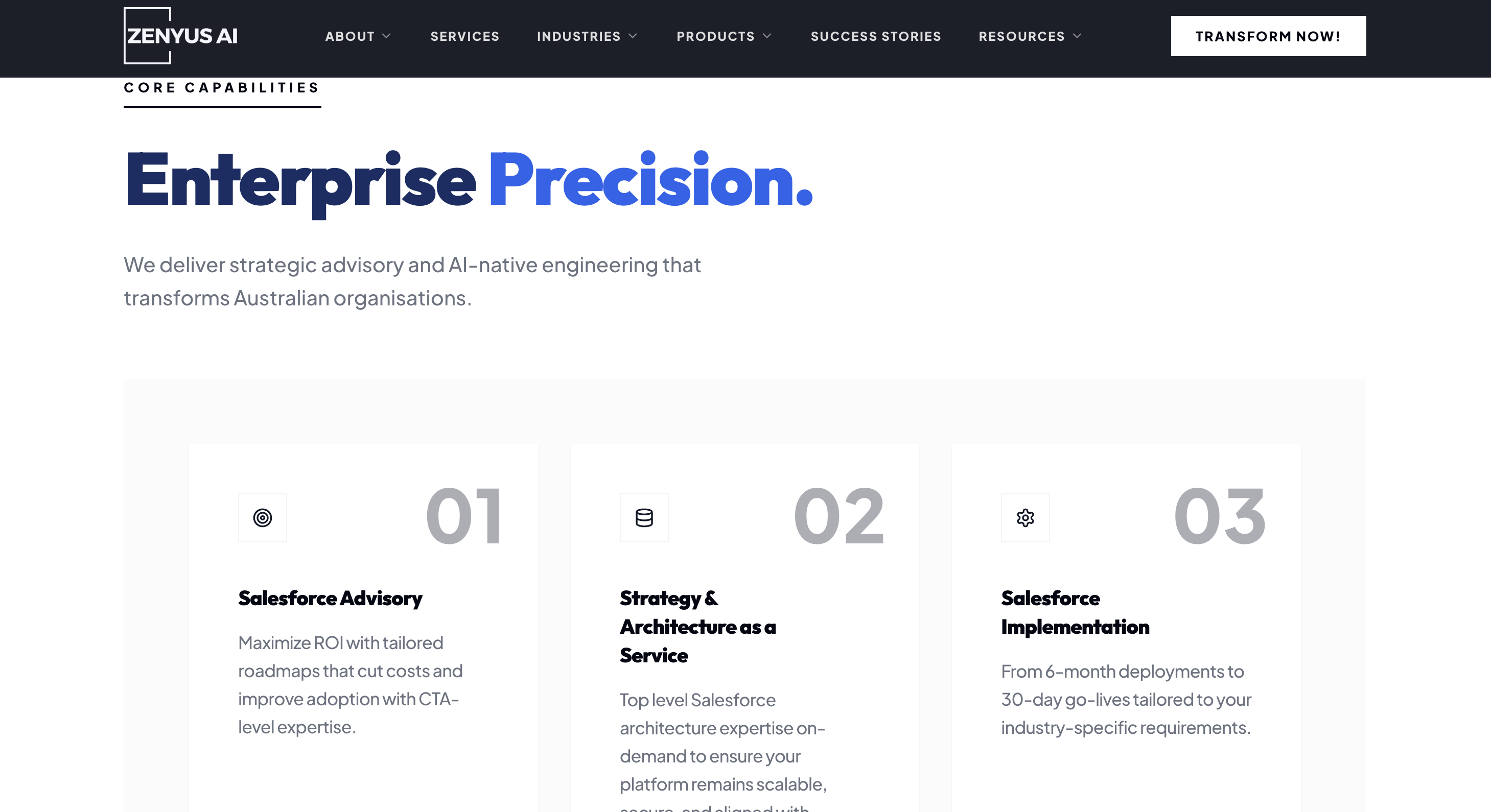
Consulting websites often overwhelm users with too much information. This redesign intentionally moved in the opposite direction.
The services section was structured using modular cards because predictable layouts reduce cognitive fatigue. Each section follows a clear rhythm through hierarchy, spacing, concise messaging, and intuitive scanning behavior.
This was less about visual creativity and more about clarity. Users should never have to work hard to understand what a company offers.
Testimonials Were Treated as Strategic Validation
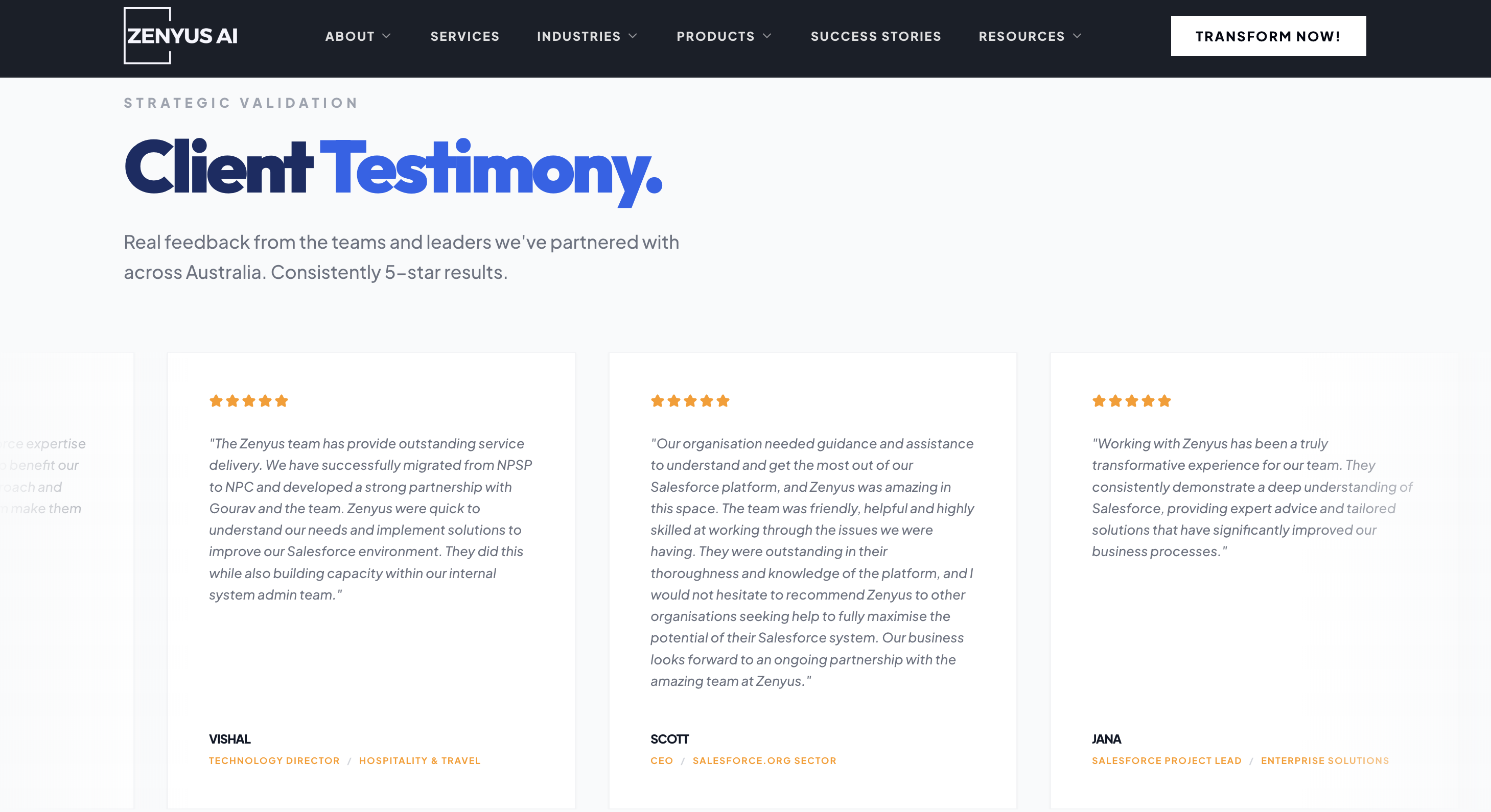
Too often, testimonial sections feel performative rather than credible.
This one was intentionally designed to feel believable. Oversized typography creates emphasis, generous spacing improves readability, and carousel movement adds fluidity without friction.
Most importantly, the testimonials themselves remain visually restrained. No exaggerated quote boxes, no over-designed corporate styling, and no unnecessary embellishments. Just clean, structured social proof.
Because credibility increases when validation feels authentic rather than marketed.
The Contact Experience Was Designed to Reduce Psychological Resistance
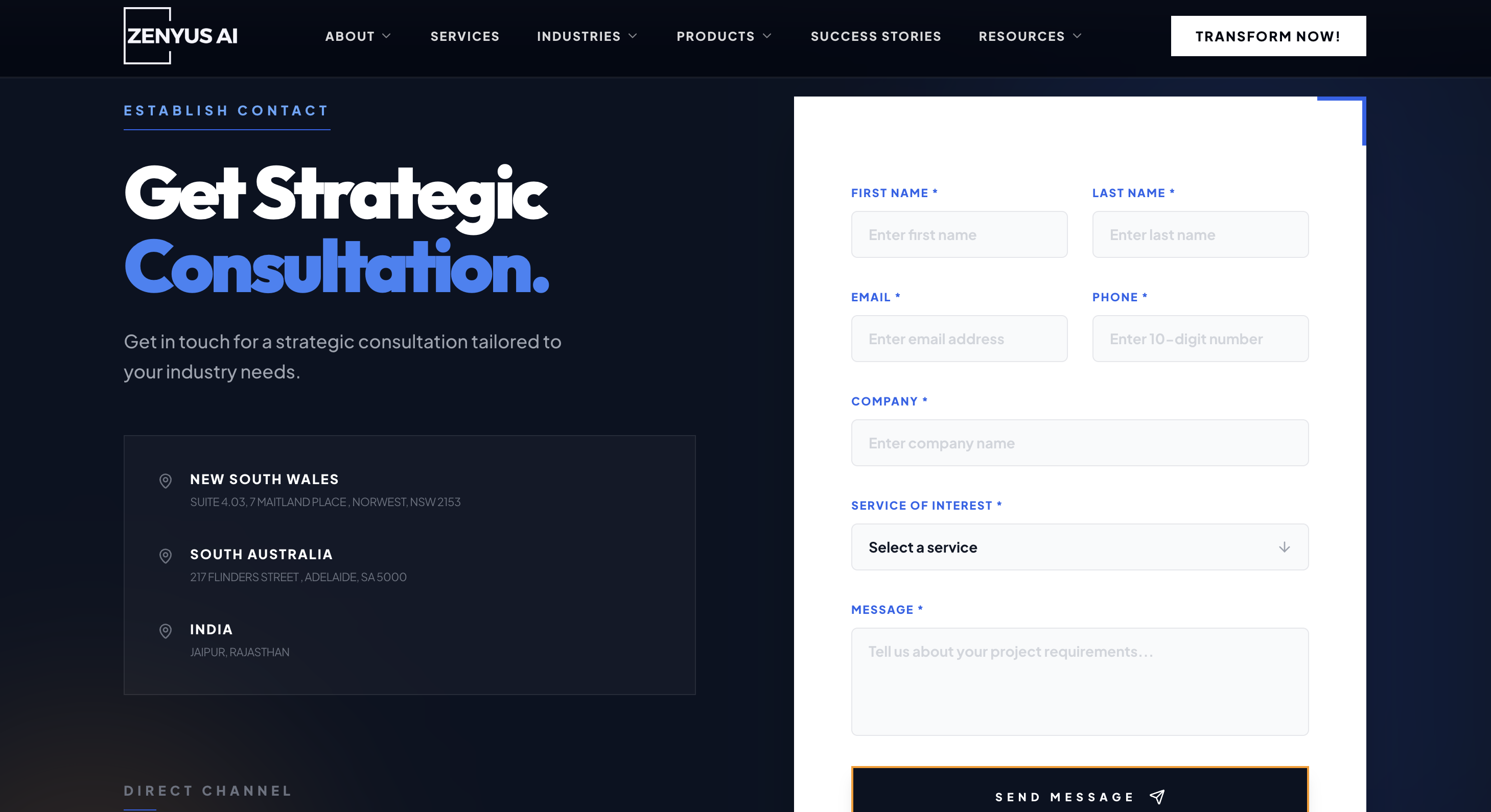
The contact experience was not designed to feel transactional. It was designed to feel consultative.
That distinction shaped the entire structure. The dark-left and light-right composition naturally guides visual movement toward the form. Even the wording—“Get Strategic Consultation”—reframes the experience psychologically.
Instead of feeling like a form submission, it feels like the beginning of a strategic conversation.
Spacing also played an important role. Large spacing between fields creates calmness, while compressed layouts create subconscious pressure. Good UX often comes down to emotional comfort as much as usability.
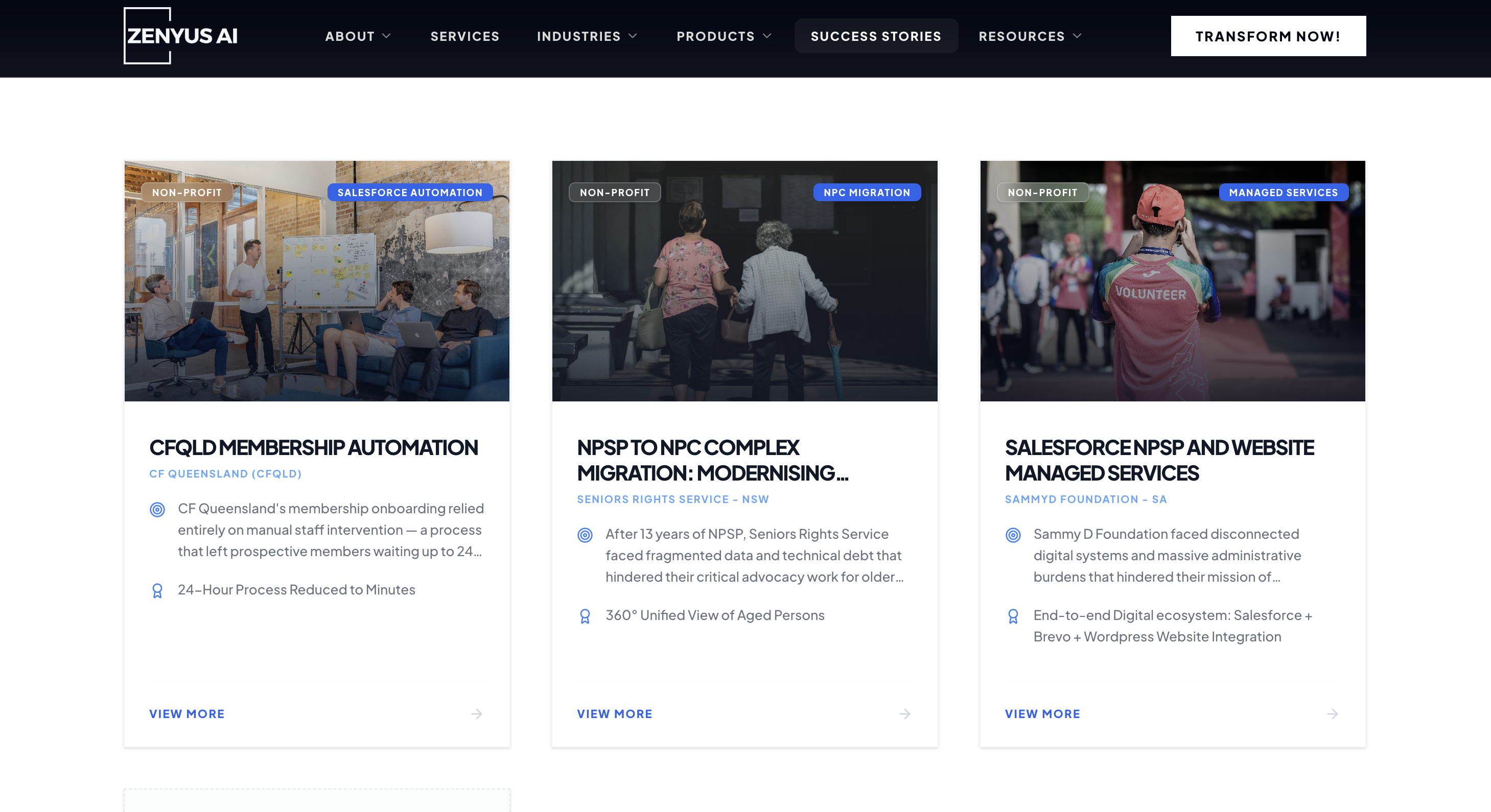
Success Stories Were Designed as Editorial Narratives
Traditional case studies often feel rigid and overly corporate. That aesthetic was intentionally avoided.
Instead, success stories were approached editorially. Oversized typography creates narrative weight, asymmetrical layouts create rhythm, and imagery adds emotional context rather than functioning as decoration.
For transformation stories like NPSP-to-NPC migrations, the objective was not only to demonstrate technical capability, but to communicate human impact.
Because nonprofit technology is ultimately about people—not platforms.
That distinction fundamentally changes how audiences emotionally connect with consulting brands.
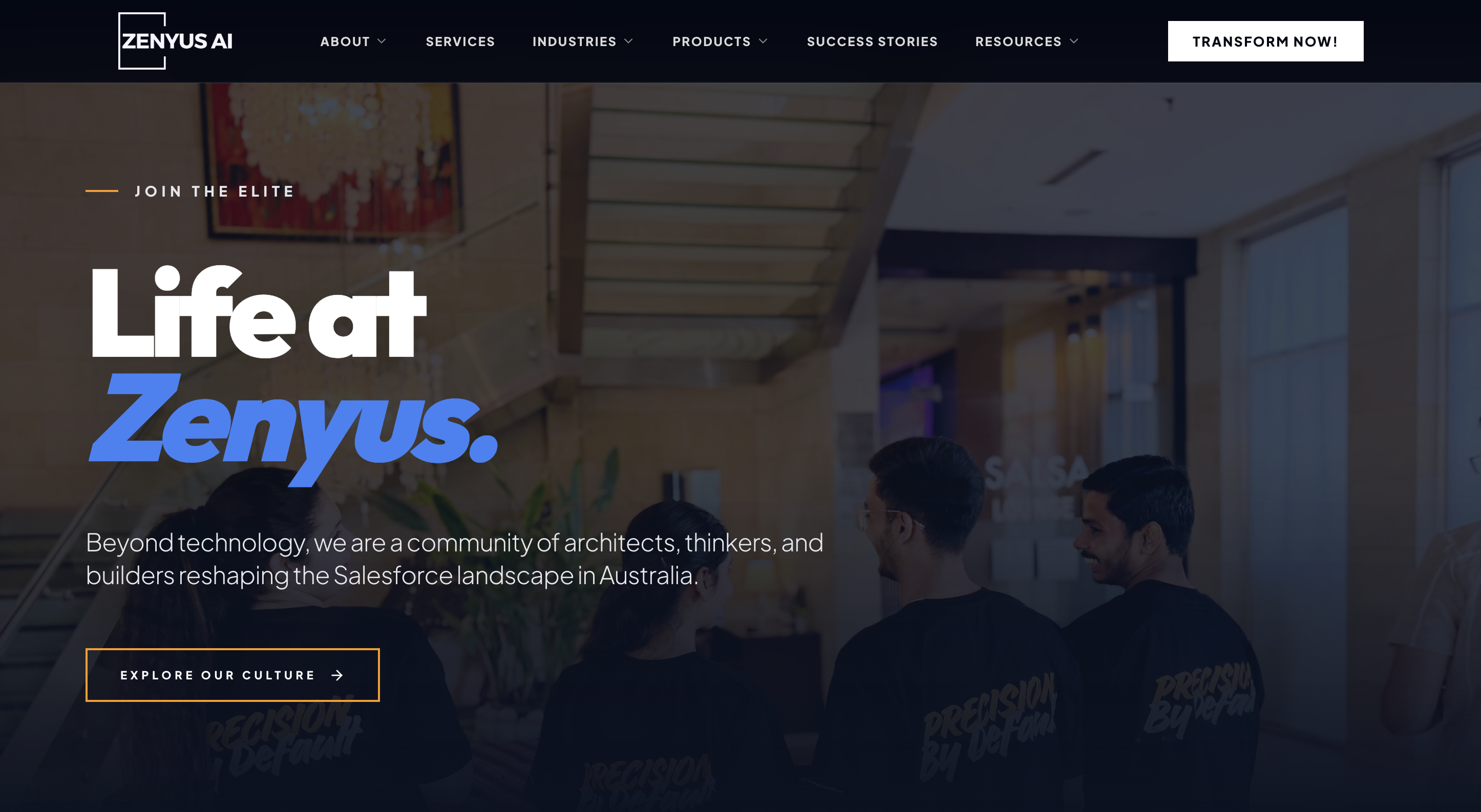
“Life at Zenyus” Was a Strategic Brand Decision
Consulting brands often feel emotionally distant, and distance weakens trust.
That is why sections focused on people, culture, internal events, and life at Zenyus became strategically important. Softer layouts, rounded visuals, lighter pacing, and candid imagery intentionally contrast with the sharper enterprise-oriented sections elsewhere on the website.
That contrast humanizes the brand.
The intended message is simple: these are highly capable professionals, but they are also real people.
Even the team section remains clean and restrained—without forced corporate theatrics or unnecessary visual drama.
Because people trust people before they trust companies.
The Entire UX Strategy Came Down to One Principle
Every design decision ultimately came back to one question:
Does this reduce uncertainty?
Because great marketing and great UX solve the same problem: they reduce friction between perception and trust.
That principle influenced everything—from layout systems and typography hierarchy to interaction behavior, content density, mobile responsiveness, and conversion flow.
Final Thought
The new Zenyus AI website is not successful simply because it looks modern.
It succeeds because it communicates maturity.
This redesign was never about creating a prettier website. It was about aligning the external digital experience with the level of strategic thinking and execution happening internally every day.
Because while users may not consciously remember every animation, interaction, or layout decision, they will absolutely remember how confidently the brand made them feel.
Priyal Sonkiya
Priyal Sonkiya is the Head of Marketing at Zenyus AI, focusing on strategic brand positioning, UI/UX storytelling, and building authentic, high-impact digital experiences for the nonprofit and public sectors.
Explore Zenyus
Continue your Salesforce and nonprofit digital transformation journey with our tools, stories, and resources.
Ready to Transform Your Salesforce Strategy?
Let our Certified Technical Architect guide your digital transformation with proven expertise.
Related Articles

Salesforce Winter '27 Release: Key Dates and Sandbox Prep
Winter '27 production upgrades land Oct 9–10. Sandbox preview opens Aug 28 — make sure your org is ready before the Aug 27 cut-off.
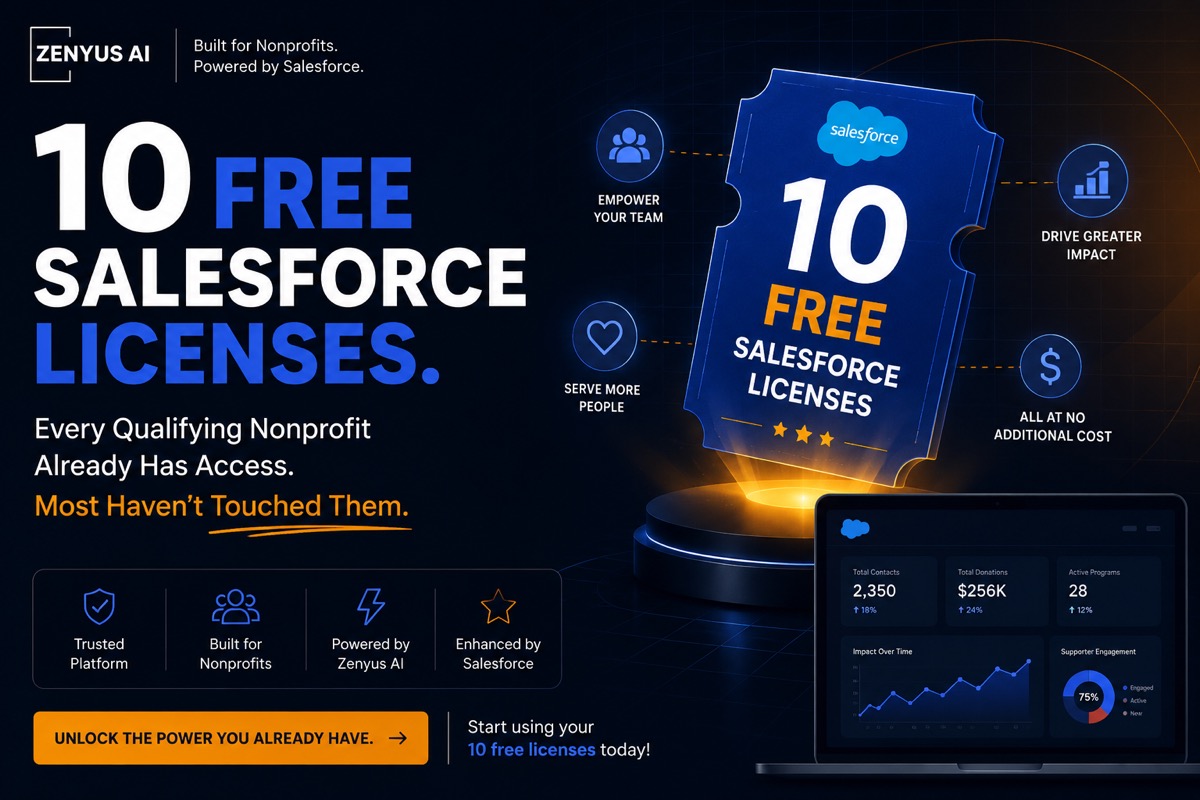
10 Free Salesforce Licenses - Potential of Salesforce “Power of Us” Program.
Salesforce offers 10 free Enterprise licenses through the Power of Us program, yet many nonprofits aren't leveraging this power. Here is why you should pay attention.